Creating art entrepreneurs

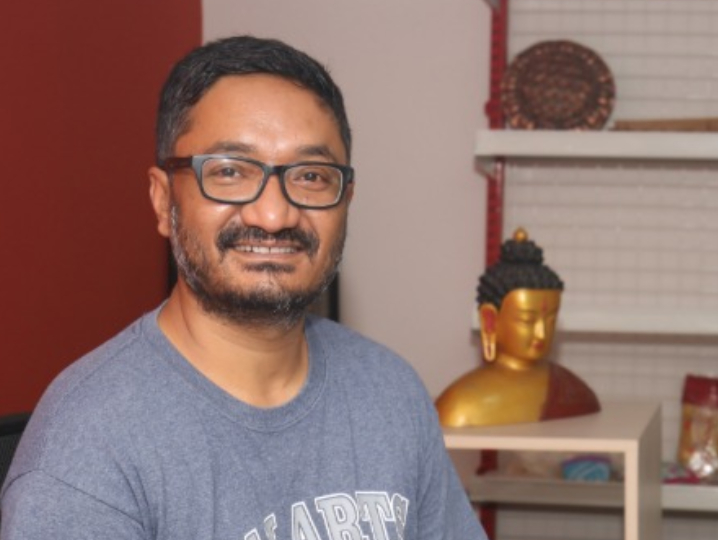
Nepal being a hub for art and artists is yet to climb up the ladder of art entrepreneurship. Sujan Chitrakar, Head of Department and Associate Professor at Department of Art and Design, Kathmandu University School of Arts, has been in the art fraternity for more than two decades. He is currently involved in his personal projects and some archival projects.
Chitrakar is an artist, art educator and independent curator who has observed art practices in Nepal change over the years. Chitrakar thinks art is a tool that reminds of someone’s roots and it should be studied in the artists’ country. He believes studying art in another culture can expose one to the knowledge but artists remain incomplete without their original root’s input.
He initiated ‘Rebuilding Bungamati’, a community art-project by mobilizing volunteers in the post-earthquake Bungamati area. He has taught many artists, who have turned successful as artistic entrepreneurs in Nepal. Canvas’ Muna Sunuwar caught up with Chitrakar to discuss his art journey, art entrepreneurship and its situation in Nepal, among others.
What changes have you observed since the first time you started off your journey in the art fraternity?
The concept of the artist has changed, only a few with passion were attracted in the past. Now, art is directly connected to the market. There are also many international platforms for artists and the idea of being a professional artist, incorporating designing, is being an economically viable option for the new generation.
How do you analyze the trend of artivism, its development in terms of quality and quantity in Nepal?
Artists become vocal through their arts, making people think in a new way and inspiring them to take action. For the justification of its quality, there’s still a need for theoretical and academic discussion amongst artists. The quantity has definitely increased and with it comes quality. We need quantity first before we come out with quality, and I think we should leave it to time, let it evolve.
Has art entrepreneurship been getting space in Nepal?
Many graduates want to start their own companies nowadays. There even are people who are launching their products in the market. But there are a lot of derivatives and the attempt does not last long. But the ones continuing, they have been bringing art forward alongside entrepreneurship really well.
Is art entrepreneurship financially viable in the context of Nepal?
There are many who are doing a great job. But sadly the country’s economy and audiences govern its viability. Nepali products need to compete with Chinese and Indian products that are being produced for mass. In recent times though, ‘Made in Nepal’ products are getting market, and not only because of the name tag of ‘Nepal’ but because they are really good. Buying any product out of pity and without interest doesn’t last long, it needs to have that quality and it can last.
What opportunities do you see in art entrepreneurship? How can it be intensified?
There are massive opportunities if we inject innovation and contemporary ideas into the production of new designs focusing on the youth as the target market. Skilled craftsmen and resources are still untapped. Nepali products are being directly distributed in the international market without making them available in the domestic market first.
If we can only just fill in the gap by addressing the changing taste of Nepalis while assuring the co-existence of designers, entrepreneurs, and skilled craftsmen, it will create massive opportunities.
But people’s reluctance in research and design aspects pose risks as the replication of simplified design keeps lingering in the industry. We lack resources to produce products that are durable, usable and aesthetically pleasing. If we want to develop resource persons to cater wider range of audiences, we have to use artists, their caliber and comfort zones, in consideration of the Nepali art eco-system.
What future plans do you have?
I want to continue my art journey and produce creative manpower in the development of Nepal and Nepali art through our rigorous Bachelors’s and Masters’s plans. Designers and artists should work with the notion of co-creation.
Leave a Comment
Your email address will not be published. Required fields are marked *